

Guide
Formulating Cosmetic Peptides: A Compatibility Study Before Scale-Up
Plan a cosmetic peptide compatibility study around ingredient form, pH, oxidation, microbiological quality, finished formula and packaging.
Read guide →Practical guides to sourcing, specifications, documentation and custom peptide projects.
Plan a cosmetic peptide compatibility study around ingredient form, pH, oxidation, microbiological quality, finished formula and packaging.
Read guide →
A practical pilot-lot review of freeze-dried peptide cake appearance, residual moisture, reconstitution behavior and chemical results.
Read guide →
How stereochemical variants arise in SPPS, why intact mass may miss an epimer, and what to ask for in a custom peptide synthesis control…
Read guide →
Understand what HPLC area purity, peptide content assay, and LC-MS identity each establish when reviewing a peptide raw-material COA.
Read guide →
A buyer's guide to acetate and TFA peptide salts, counterion testing, net peptide content, and the specification fields needed before bulk purchasing.
Read guide →
An OEM handoff checklist for peptide powder projects covering approved specification, packaging artwork, lot traceability and release responsibilities.
Read guide →
How to separate peptide ingredient studies from substantiated finished-cosmetic claims, with EU and US regulatory references.
Read guide →
A purchasing and QC framework for comparing peptide raw-material lots using identity, methods, specifications, traceability and change control.
Read guide →
How buyers can assess stability evidence, packaging, storage instructions and retest or expiry language for lyophilized peptide powder.
Read guide →
A practical identity checklist for cosmetic peptide buyers comparing an INCI name, CAS number, amino-acid sequence and the actual supplied material.
Read guide →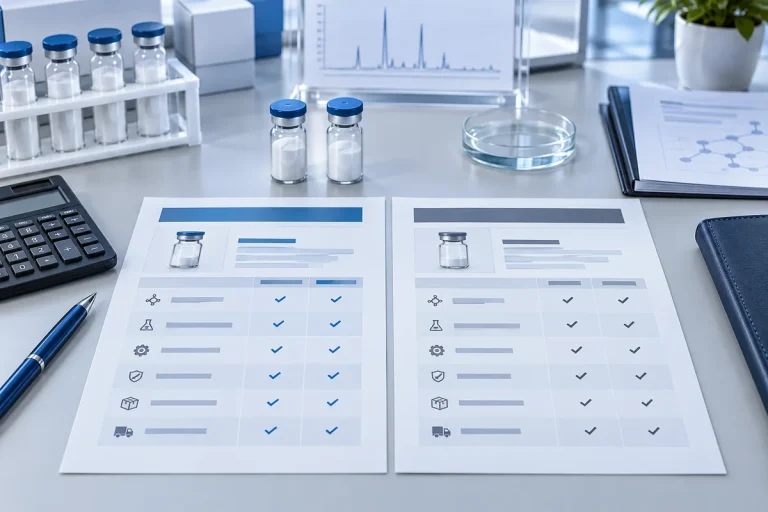
Compare like-for-like specifications, batch documents, lead time assumptions, packaging, Incoterms and support for deviations. A low unit price alone does not describe total project…
Read guide →
Give the name or CAS number, sequence if relevant, target grade, amount, pack size, documentation needs and destination market. This reduces clarification cycles.
Read guide →